
Swansea Marina Control panels storm damage
Safeguarding Maritime Infrastructure: Trafalgar Bridge Emergency Control Panel Replacement
Rapid Response to Coastal Storm Damage
In February 2022, during a period of severe storms and high tides, our team was urgently called to Trafalgar Bridge—a critical link for both road and maritime traffic. The bridge’s two main control panels, housing Mitsubishi PLCs, had become waterlogged with sea water after waves breached the structure. For safety, both panels were isolated, resulting in the immediate closure of the bridge and significant disruption to local transport and port operations.
Prioritising Operational Continuity
Recognising the essential role of Trafalgar Bridge in supporting both public access and maritime logistics, our team made restoring safe operation the highest priority. We mobilised rapidly, working closely with the client and local authorities to assess the damage, design a robust solution, and communicate progress throughout the project.
Engineering for the Maritime Environment
Our assessment revealed that the original Mitsubishi PLCs were obsolete, and the control panels had suffered extensive saltwater ingress—a common challenge for coastal and port infrastructure. To ensure long-term resilience, we designed a replacement system with the following key features:
- Refurbished PLCs: Sourced from approved suppliers to ensure compatibility and reliability, addressing the challenge of obsolete components.
- IP68 Stainless Steel Enclosures: Specified for continuous immersion, these enclosures provide the highest level of protection against water ingress, essential for maritime and tidal locations. Due to global supply constraints, these were sourced from the USA, with a 12–14 week lead time.
- GRP Protective Housings: Sourced from UK suppliers, these robust enclosures provide an additional layer of protection, tailored for harsh marine environments.
“The equipment is suitable for continuous immersion in water under conditions specified by the manufacturer. Normally, this means the equipment is hermetically sealed. However, with certain types of equipment, water can enter but only in such a manner that it produces no harmful effects.”
Project Delivery and Collaboration
While awaiting the arrival of the specialist enclosures, we completed all associated civil works, including the replacement of junction boxes and emergency stop push buttons with IP-rated equipment. Our engineers built and tested the new control panels in our workshop within five days of receiving the parts, ensuring rapid deployment once on site.
Throughout the project, we coordinated closely with local contractors, port authorities, and stakeholders to minimise disruption and maintain safety in a busy maritime setting.
Restoring a Vital Maritime Link
With the arrival and installation of the new control panels, Trafalgar Bridge was successfully recommissioned and reopened to the public and port traffic on 28th June. The project restored a critical connection for both land and maritime operations, supporting the smooth flow of goods, services, and people.
Setting a Standard for Maritime Resilience
Our approach demonstrates best practice for the repair and upgrade of control systems in challenging coastal and tidal environments. By specifying IP68-rated enclosures, sourcing reliable components, and prioritising rapid response, we have delivered a solution that will serve Trafalgar Bridge—and the wider maritime community—for many years to come.
Nationwide Relevance
This project highlights the importance of robust, future-proofed control systems for maritime infrastructure across the UK. Whether for bridges, lock gates, harbour controls, or port automation, our experience at Trafalgar Bridge underscores the value of:
- Proactive risk assessment and rapid mobilisation
- Engineering solutions tailored for marine and tidal conditions
- Collaboration with local and national suppliers
- Commitment to minimising operational downtime
Looking Ahead
As climate change brings more frequent and severe weather events, the need for resilient maritime infrastructure has never been greater. Our work at Trafalgar Bridge stands as a model for similar projects nationwide, ensuring the UK’s ports, harbours, and coastal crossings remain safe, reliable, and ready for the future.
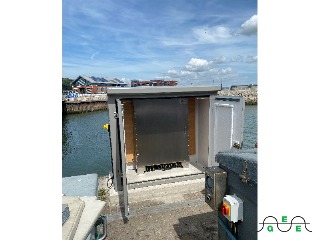 IP68 Enclosure
 Bridge opened
 Inside West side control panel


